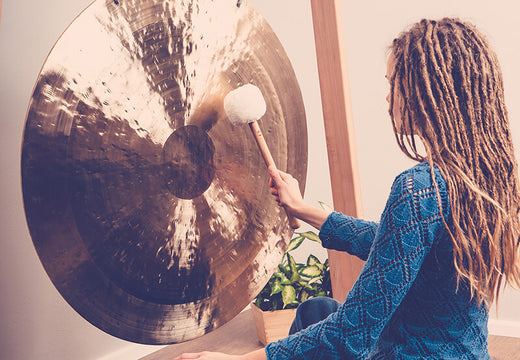


In short: A tam-tam is not the opposite of a gong, but rather a type of gong—a flat gong with a curved rim. In an orchestra, however, a distinction is made: The hump gong has a fixed pitch, while the tam-tam has no fixed pitch and gradually builds up to a large, roaring sound.
The TamTam gong is one of the most popular gong models. Used all over the world, this beautiful and very imposing gong not only impresses with its impressive appearance, but above all with its very powerful sound. The TamTam gong can be used as a musical instrument for quiet and calm tones, but also offers a spectrum of very loud sound nuances. This is exactly what makes the TamTam gong so special: its versatility and its beautiful design, which fits perfectly with our traditional idea of a gong. In Europe, the TamTam Gong (often spelled Tam-Tam Gong) is often referred to as a Chinese temple gong. In Asia, on the other hand, the TamTam Gong is known as the "Chao Gong". But even if the gong has a different name worldwide as a musical instrument, its reverberating sound speaks the same language in every country.
Tamtam or Gong: What's the Difference?
| Tamtam | Feng Gong | Humpback Gong | |
|---|---|---|---|
| Form | flat, with the edge folded over | flat, without a rim, thinner toward the outside | A bump in the middle |
| Sound | no fixed pitch | No fixed pitch, very rich in overtones | a firm, clearly audible sound |
| Sound | builds up slowly, deep and powerful | responds quickly, with a floating, ethereal quality | short, clear, bell-like |
| Typical Applications | Orchestra, Gong Bath, Sound Therapy | Meditation, Gong Bath, Sound Journey | Rituals, Gamelan, Orchestra |
| Matching Mallet | large and soft, e.g., Profi Gong Mallet L460 | Soft to medium, e.g., Profi Gong Mallet L355 | smaller and firmer |
What this means for you: Both the Tamtam and the Feng Gong are equally suitable for a gong bath or meditation at home. The Tamtam requires a little more patience to warm up, but it rewards you with a deep, resonant fundamental tone. The Feng Gong responds more quickly and has a brighter sound. To find out which gong is right for you, read “Buying a Gong”; you can find all models under “Gongs.” For an overview of all types of gongs, see “Gong: History, Types, and Everything You Need to Know.”
The history of the TamTam Gong
The TamTam gong has a long history that began many centuries before Christ. The oldest known example of a TamTam gong was found in China—it dates back to approximately the 7th century B.C. Thanks to its impressive sound and beautiful appearance, the TamTam gong quickly spread beyond China’s borders throughout the entire East Asian region. At that time, it was common in China to assemble entire orchestras that played all their music using melodious metal discs—in other words, what we now call gongs. Especially during rituals, celebrations, and other occasions, playing various gongs was an integral part of the proceedings, as various archaeological excavations have shown. This still demonstrates to us today just how important the role of the TamTam gong was in Asia even back then. Over time, however, the TamTam gong also found its way to Europe. The exact circumstances behind this are not known. It is believed, however, that the TamTam gong—which had undergone significant further development by then—reached Europe during the Turkish Wars of the 17th century. It was used only for specific occasions—particularly funerals. Over time, however, the social significance of the TamTam gong grew steadily, so that by the early 20th century it was finally played as an integral part of orchestras for the first time. What makes it unique is that the tam-tam gong produces a significantly deeper and more resonant sound than other instruments, thereby giving the orchestra a completely new direction. The range of sounds varied depending on the object used to strike the gong—and the gong became an extremely versatile component of the orchestra. Even today, the gong is widely used in professional musical settings. Thanks to its relaxing effect and pleasant vibrations, it is also increasingly used in therapeutic and private settings. Learn more about the history of the gong in our blog post.
Beautiful appearance and appealing sound - that's the TamTam Gong
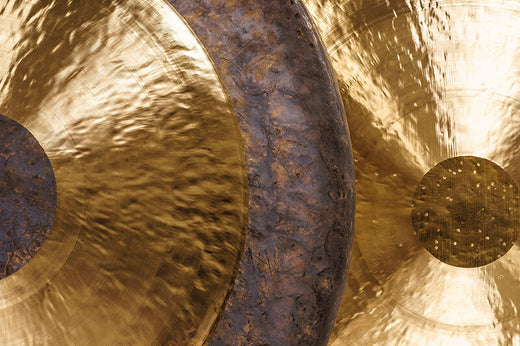
Hardly any other gong has such a powerful sound as the TamTam gong. The extremely impressive sound is primarily based on a very well thought-out combination of materials and shape, which together make up the intensity of this TamTam instrument. The Tam Tam gong is a so-called flat gong, which is usually made of bronze.

The average diameter of a classic TamTam gong is 100 to 150 centimetres, although larger gongs have also been developed in isolated cases throughout history. The TamTam gong is characterized above all by the fact that the edge, which is also clearly defined visually, has been slightly bent to create a particularly strong and impressive sound. The disk of the TamTam instrument usually hangs on a metal stand and is attached to it with various ropes. This allows the gong to vibrate almost freely and achieve particularly beautiful and harmonious pitches.
How is the TamTam gong struck?
If you want to play the TamTam gong, you will of course need the right tools. The good news is that the TamTam instrument can be played with both a gong mallet and a gong driver. So you have the choice of which beautiful tones and nuances you want to play on the gong instrument. Nevertheless, it is also important to choose the right mallets or gong mallets. We at ollihess have developed some products especially for the TamTam gong that make the impressive sound of the gong possible in the first place.
The perfect gong mallet for the TamTam gong
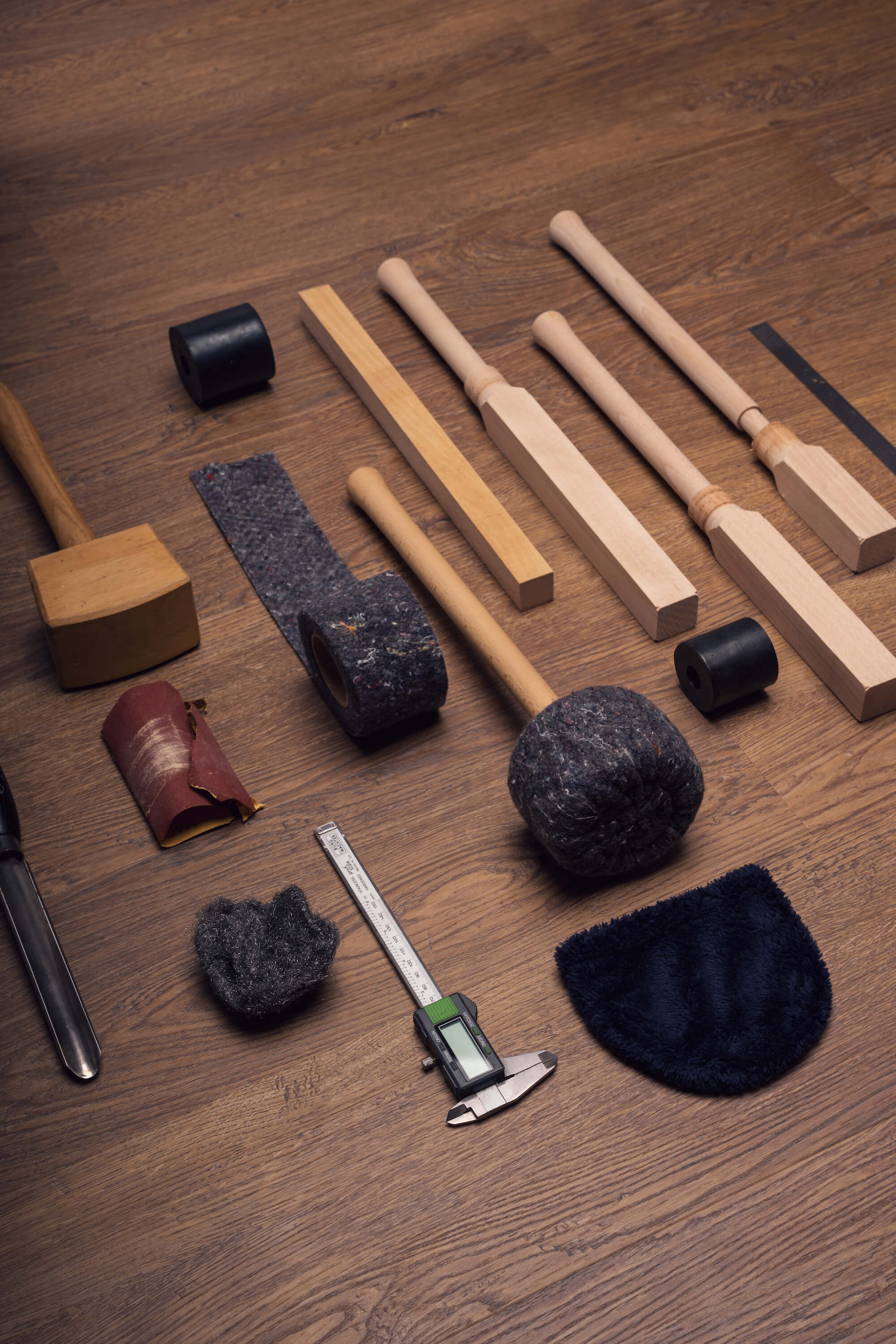
Ideal for this: The Profi Gong Mallet L460, which is also ideal for larger TamTam gongs thanks to its above-average dimensions. With its perfectly tuned and shaped felt head, the Profi Gong Mallet L460 from Olli Hess produces the best possible sound. At the same time, the very soft material ensures that annoying striking noises are avoided and a very pure and unadulterated sound is produced. The warm and earthy tones produced on the gong with the ollihess L460 professional gong mallet are the basis of a harmonious sound that will guide you through all facets of the world of gongs. If you opt for the TamTam chime with a mallet, it produces very deep and vibrating tones that are ideal for sound meditation.
Play the TamTam Gong with the friction mallet
Alternatively, you can, of course, use a gong mallet to play the TamTam Gong as an instrument. This produces much brighter tones, which naturally sound a bit more harmonious but less hypnotic and sensual. Our gong mallets from the Lava Edition, for example, are well-suited for playing the TamTam Gong. Their soft “ caoutchouc ” head largely prevents striking noises and, thanks to its very soft surface, leaves no marks on the gong. The “ the friction mallets ” from the Lava Edition are handcrafted from pure “ natural caoutchouc ” and, like all our products, are exceptionally durable. To find out which “ friction mallet ” is right for your gong, read “Finding the Right Gong Mallet.”