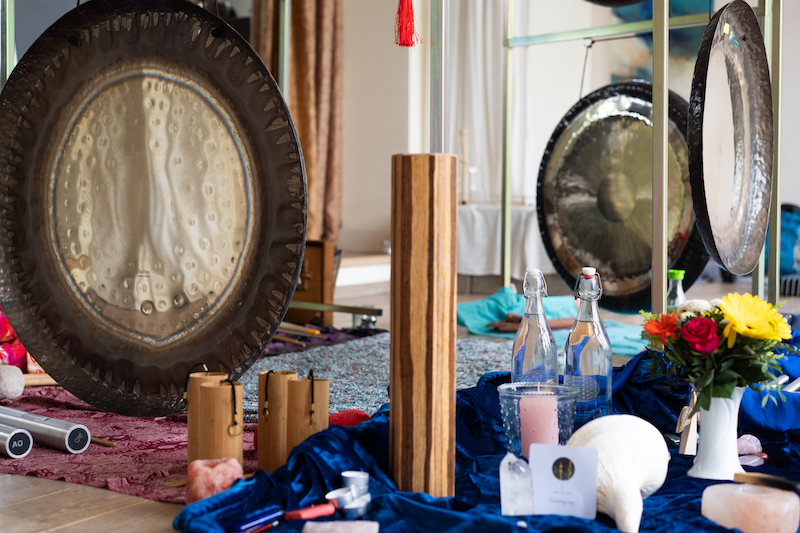


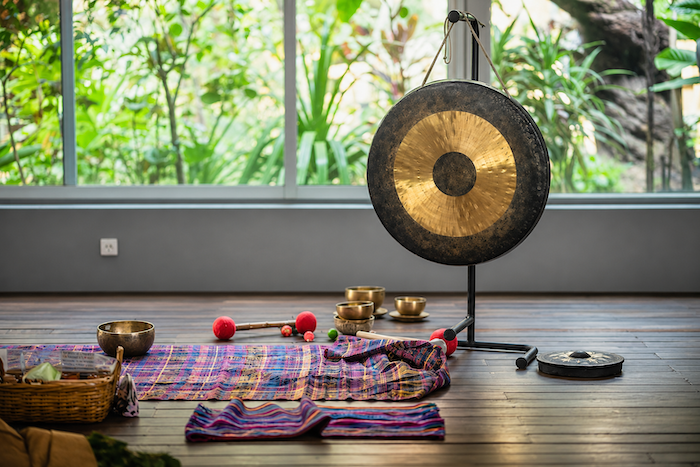
A sound bath is more than just the interplay of different sounds. The space in which they are created and the way you guide your participants also play an important role. After all, not everyone perceives sounds in the same way. What is relaxing for some may be intense or unfamiliar for others.
So how can you create a sound space where people feel supported and comfortable, can recognize their own limits, and experience sounds at their own pace? We’ve put together five tips for you.
1. Create a space that provides guidance and support
A thoughtfully designed sound space begins even before the actual session starts. Make sure the atmosphere is pleasant, there is enough space, and the environment is as free from distractions as possible. Explain to your participants in advance how the session will generally unfold, which musical instruments you will use, and whether there may be louder passages or long pauses.

Also, show them where the exits and restrooms are located. That way, everyone will know what to expect and will be able to immerse themselves in the audio experience more easily.
2. Let your participants decide for themselves
Not everyone wants to close their eyes, lie down, or fully immerse themselves in the sounds during a sound bath. And that's perfectly fine.
Encourage your participants to pay attention to their own needs. They may adjust their position, keep their eyes open, take a break, or leave the room. Wearing ear protection may also be an option.
A thoughtfully designed soundscape leaves room for individual choices rather than dictating a specific way of experiencing it.
3. Start gently and give the sounds time
Especially at the beginning of a sound bath, a gradual build-up of sound can help you settle into a state of calm. Start, for example, with a few gentle strikes on a singing bowlgong and let the tones fade out completely.

With a soft gong mallet, you can start by producing calm, warm tones. Different mallets and friction mallet then allow you to gently expand the sound spectrum without having to bring in additional instruments right away.
Pay attention to the volume and your group’s reactions. Not every session needs a powerful climax. Often, it’s precisely through restraint that a particularly pleasant, meditative, or even profound experience arises.
4. Create space through grounding and taking breaks
A gong bath or sound bath doesn't have to be filled with sound the entire time. Deliberate pauses give your participants time to take in what they've heard and refocus.

From time to time, you can invite participants to feel their connection to the floor, become aware of their own breathing, or focus their attention on the room. Simple prompts like these can help people stay connected to the here and now, even during intense musical passages.
It's important that these invitations remain voluntary. Each person decides for themselves what feels right at the moment.
5. Let go of your own expectations
Perhaps you've planned a specific sound sequence for your sound bath or gong bath, or you'd like to help participants achieve a particularly deep state of relaxation. Even so, it's impossible to predict how individual participants will react to the sounds.

Some people experience a sense of calm, while others are primarily aware of the different timbres. Still others find certain sounds unpleasant or feel the need to move around from time to time. All of these reactions are valid.
Therefore, don't try to evoke a specific experience with particularly intense sounds. Your task is to create a mindful setting—not to produce a specific result.
Conclusion: A thoughtfully designed sound space allows for freedom
Whether you're leading a sound bath, a sound meditation, a gong bath, or a yoga class accompanied by sound: It's not about using as many musical instruments as possible or creating a particularly intense experience.
What’s much more important is a mindful approach to sound, attentive guidance, and enough space for your participants’ individual needs.
With just a gong or a singing bowl, the right mallet, and a sense of dynamics, pauses, and timbres, you can already create versatile soundscapes—in which each person can have their own unique experience.