

The Rauhnächte have always been a fascinating period of time full of mysticism and meaning. These magical nights, which symbolize the twelve months of the coming year, take place between Christmas and the Three Wise Men on 6 January. They have always been surrounded by legends, myths and magical stories. Ancient customs and rituals are practiced during this special time and are gaining popularity again today.
When do the Rauhnächte begin?
Today, many people begin the Rauhnächte and their associated rituals, usually between Christmas Eve and Epiphany. The first Rauhnacht therefore falls on the night of December 24th to 25th.
When do the Rauhnächte end?
If you start on the night of December 24th to 25th, the last Rauhnacht takes place on the night of January 5th to 6th. Most people today celebrate the Rauhnächte for 12 nights.
The Celts celebrated the 'Rauhnächte' (Rough Nights) over 13 nights, as they oriented themselves by the moon, and each 'Rauhnacht' represented one of the 13 lunar months of the coming year. In some traditions, they even start on the night of December 21st to 22nd – in the so-called 'Thomasnacht' (St. Thomas Night). The night leading up to St. Thomas' Day is the shortest day of the year.
Note: Most people today celebrate the Rauhnächte over 12 nights between December 24 and January 6.
Special: Get your free Rauhnächte Guide with 13 rituals
To fully experience the transformative power of the mystical winter nights, we have put together this practical guide for you. With our 13 rituals and meditations, you will find more clarity and focus in the new year!
What you can expect:
... Powerful meditations with and without sound
... Journaling rituals for more clarity
... Breathing exercises for focus & new energy
... valuable knowledge about the exercises & more
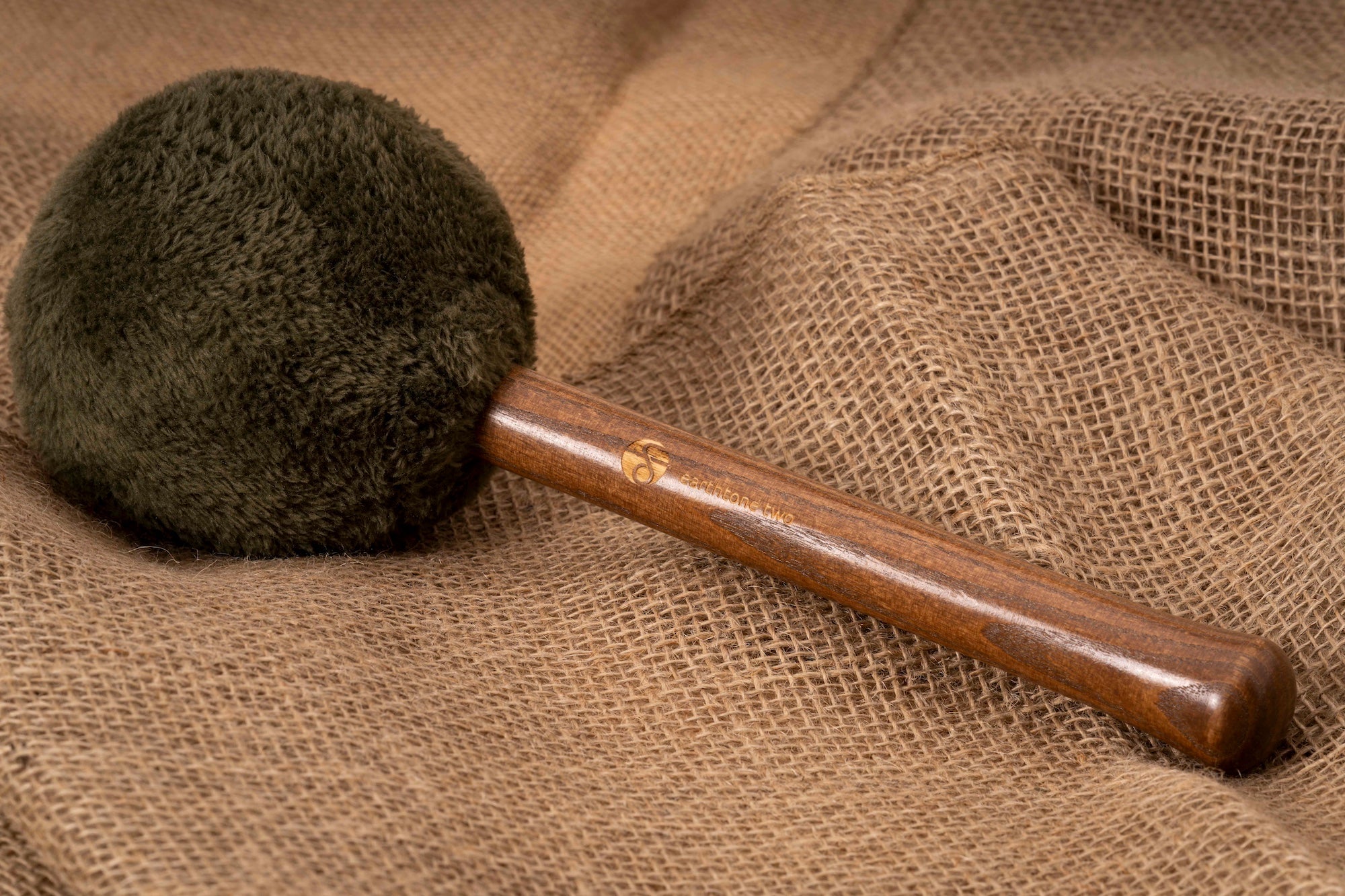
… Mallet & friction mallet recommendations from Olli for sound meditation
Note: Our Rauhnächte Guide is currently no longer available for download. But stay tuned – we'll have great extras for you again this year!
Rauhnächte guide: These are the themes and months of the Rauhnächte
Setting priorities on each Rauhnacht helps you to create structure and orientation, making it easier for you to concentrate on certain areas of your life. This focus encourages self-reflection, personal development and makes it easier to set specific intentions for the different themes in the coming year. However, the focus for the Rauhnächte can vary depending on the source, as they are based on different traditions, interpretations and personal approaches.
In addition, each Rauhnacht relates to a month of the coming year. This creates a symbolic link between the spiritual work during the Rauhnächte and the shaping of the new year.
We have compiled the themes and months of the Rauhnächte 2024/2025 for you:
- Rauhnacht: December 24 to 25
Month: January
Theme: Looking back on the past year, letting go of the old - Rauhnacht: December 25 to 26
Month: February
Theme: Come to rest, find inner peace - Rauhnacht: December 26 to 27
Month: March
Theme: Opening your heart to yourself and others - Rauhnacht: December 27 to 28
Month: April
Theme: Trust in your own intuition and inner wisdom - Rauhnacht: December 28 to 29
Month: May
Theme: Self-care and enjoyment - Rauhnacht: December 29 to 30
Month: June
Theme: Friendships & relationships, forgiveness and healing in relationships - Rauhnacht: December 30 to 31
Month: July
Topic: Perceiving and accepting your own feelings - Rauhnacht: January 31 to 01
Month: August
Theme: Setting visions and goals for the new year - Rauhnacht: 01 to 02 January
Month: September
Topic: Sorting and prioritizing - Rauhnacht: January 02 to 03
Month: October
Theme: Developing mindfulness for the present moment - Rauhnacht: January 03 to 04
Month: November
Theme: Gratitude for what is - Rauhnacht: 04 to 05 January
Month: December
Topic: Recognizing and integrating the insights and meaning of the Rauhnächte
Rituals during the Rauhnächte
Rituals during the Rauhnächte can serve as an anchor for you during a phase of transition and change – they provide you with stability, clarity, and awareness. Whether you use gongs or singing bowls, burn incense, write, or meditate: any ritual that feels right for you can open a space for reflection and renewal. It doesn't have to be complicated or particularly elaborate – even with simple yet deeply effective actions, you can use this time to ground yourself, gain clarity, and trust your inner compass.
A special ritual for the 1st Rauhnacht: journaling to let go
For the first Rauhnacht from December 24 to 25, we would like to recommend a ritual from our Raunächte guide. The first Rauhnacht focuses on the month of January in the coming year. It is about reflecting on the past year and letting go of the old.
1st Rauhnacht (December 24th to 25th)
Theme: Reflection
Instructions for the Journaling Ritual:
A powerful ritual you can try during the Rauhnächte is journaling for release. Take some time to mentally review the past year, month by month. Write down what you want to let go of – fears, doubts, or stressful situations. Afterwards, you can safely burn the paper – for example, outdoors in a fireproof bowl – to symbolically say goodbye to these things.
Note: Our Rauhnächte Guide is currently no longer available for download. But stay tuned – we'll have great extras for you again this year!
Gong meditation can help you to get your energy flowing again and open yourself up to new things. The deep sounds of the gong help to release physical and mental tension and promote inner clarity.
YouTube tip: Experience a transformative sound journey with Olli on YouTube. The 15 to 20-minute gong meditation to let go with the Gong Wega accompanies you on a journey of relaxation and inner peace.
Ritual for the 4th Rauhnacht: Incense burning with gong sounds
Smudging during the Twelve Holy Nights has a long tradition. The rising smoke symbolizes cleansing, transformation, and connection with the spiritual. During this special time between the years, smudging can help you more easily let go of the old and energetically create space for the new. Smudging not only clears spaces, but it can also help stuck thoughts and emotions flow, opening you up to your intuition, stillness, and inner guidance. Smudging can thus be a transformative companion on your journey through these magical nights.
4th Rauhnacht (December 27th to 28th)
Theme: “Trust in one's own intuition and inner wisdom”
Instructions for the Smudging Ritual:
- Choose an incense, such as sage or lavender, and light it. You can use both incense bundles and loose incense.
Hold a fireproof container and keep it at a safe
distance from your body. - Move slowly through the room, allowing the smoke to drift over
your body. You can specifically smoke certain areas of your body
by holding the vessel in front of them – for example, in front of your head, heart
or hand. - Walk very mindfully and repeatedly direct your gaze towards
your incense as you walk. Observe how the smoke develops and drifts
towards your body. Continue this for 2 to 3 minutes. - Put the incense aside and pick up a friction mallet.
- Gently guide the friction mallet clockwise over the surface of the
gong and create long-lasting harmonious sounds. - Pay attention to how the sound unfolds and what emotions or
thoughts arise. This can help you better perceive your inner voice.
What are the Rauhnächte?
The Rauhnächte are considered a powerful time of reflection and manifestation. Many people use them to reflect on the past year, let go and manifest their visions for the coming year. Traditional rituals such as incense burning, meditation, oracles and journaling are typical components of this time. Each of the twelve nights symbolizes a month of the new year - an ideal time to purify and realign yourself.
When are the Rauhnächte?
Traditionally, the Rauhnächte (Rough Nights) begin on the night of December 24th to 25th and end on January 6th, the night before Epiphany. This is how they are most commonly celebrated and practiced, as these twelve nights symbolically represent the twelve months of the coming year. However, in some traditions, the Rauhnächte already begin on December 21st and extend over 13 nights.
Where do the Rauhnächte come from?
Some sources suggest that the origins of the Rauhnächte lie in Germanic and Celtic cultures. Over time, these customs were then mixed with Christian influences and passed on in their current forms. We have briefly summarized for you how the Rauhnächte are celebrated in different cultures.
How are the Rauhnächte celebrated with rituals and customs in different cultures?
Different cultures celebrate the Rauhnächte in very different ways:
- Central Europe: Here, traditional incense burning with sage, juniper or frankincense is a popular Rauhnachts ritual for the energetic cleansing of rooms and houses. Special attention is also paid to dreams and signs during the Rauhnächte, which are seen as harbingers of the coming year.
- Scandinavia: In Scandinavia, the Rough Nights are closely linked to old Nordic traditions and the winter solstice. They are often seen as a magical time when the boundary between the worlds becomes blurred. People used to light fires to keep evil away.
- Latin America: In Latin America, the Rauhnächte are not traditionally celebrated as they have no cultural roots here. However, there are rituals similar to those in Central Europe, in which sacred plants such as Palo Santo are used to burn incense in order to release energy and create space for something new.
Preparing for the Rauhnächte: a ritual place as an anchor
To consciously experience the Rough Nights, you can set up a personal ritual or meditation place with a small altar. This should be a quiet place in your home where you feel comfortable and can linger for a while. You can also place incense, candles, a journal and tarot or oracle cards in your space. All of this can help you to engage with the Rauhnachts rituals and connect with the themes of each night with clarity and focus.
Use the magic of the Rauhnächte for yourself
The Rauhnächte invite you to pause, let go of the old and start the new year with clarity and confidence. Rituals such as journaling, incense burning and sound meditations help you to make this time particularly conscious and use its transformative power for your personal development.