


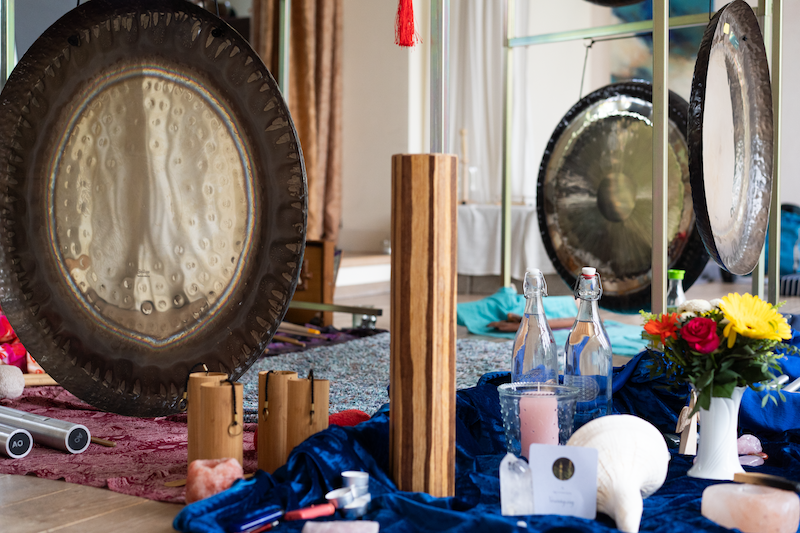
What is a sound bath?
A "sound bath" refers to a situation in which several musical instruments are played either one after another or simultaneously. In this process, different sounds blend together to form a harmonious soundscape. The instruments complement each other with their various timbres, creating a rich and varied sound experience. However, you can also create a sound bath using just one instrument by experimenting with different playing techniques, timbres, and dynamics.
If you’d like to enrich your sound bath with additional timbres, just three well-matched instruments are enough to create a versatile soundscape and evoke different moods. What matters most isn’t the number of instruments, but how you combine their sounds and give them space to unfold.
7 Tips for Your First Sound Bath
These seven tips will help you get started with your own sound bath, choose the right instruments, and gain your first experiences with how they work together. You’ll learn what’s important when designing a sound bath and how you can create your own soundscape step by step.
1. Start with a musical instrument that you enjoy playing
A gong or singing bowl is particularly well-suited for getting started and as the foundation for your first sound bath. The gong, in particular, offers a versatile soundscape that you can continually expand upon using different mallets and playing techniques. But one or more singing bowls can also serve as a wonderful foundation. High-quality singing bowls are characterized by subtle vibrations and a long-lasting resonance. Their harmonious tones blend well with other musical instruments.
So you don’t need a complete set of instruments to get started. In any case, it’s a good idea to take your time getting to know your primary instrument and familiarizing yourself with its various sound possibilities. This will help you develop a feel for its tonal character, making it easier later on to decide which other instruments will complement your sound bath effectively.

Tip: To get started, we recommend, for example, the Blacksteel Gong Sunrise with a 60 cm diameter, paired with the ollihess Soft Line M Mallet for gentle, resonant tones. Alternatively, you can start with a “ singing bowl ” such as the Peter Hess® Universal Bowl and our CH1 JO Chakra Mallet, and expand your sound bath set step by step from there.
2. Choose instruments that complement each other sonically
When choosing your sound bath instruments, the most important factor is how their sounds harmonize with one another. Deep, resonant sounds—such as those from a gong—can be beautifully combined with the bright, delicate accents of a Koshi chime. A singing bowl , and a kalimba can also complement each other well with their different timbres.
Not all instruments need to be played at the same time. Often, it is enough to play them deliberately one after the other and let the sounds blend gently into one another.
If you’d like to work directly with several singing bowls that are tuned to harmonize with one another, our Sound Bath Bowls Set is a wonderful option. It consists of five singing bowls that are harmoniously tuned to one another, creating a warm, multi-layered soundscape when played together. You can play the bowls individually, combine them, or use them to complement your gong.

3. Make sure you have the right mallets and friction mallet
Gong mallets and friction mallet have a significant impact on the sound of your instrument. While harder mallets tend to produce clear, overtone-rich, and crisp sounds, softer mallets produce gentle, warm, and deeper tones. The size of the mallet head, the striking surface, and the materials used also influence the sound. Therefore, first decide which timbres you prefer, and then choose mallets and friction mallet that will help you produce those sounds.
To get started, you don’t need a wide selection of mallets. A versatile, medium-soft gong mallet is a good foundation for trying out different playing techniques and developing a feel for your gong. You can also choose a softer or harder mallet to expand your range of sounds. With a gong scraper, you can bring even more variety to your sound bath: create long-lasting, ethereal sounds that add another dimension to your sound bath.
Not sure which mallet is right for your gong and the sound you're looking for? Our Mallet Finder will help you find the right one.
4. Less is more—give the sounds some space
A sound bath is not about filling a room with as many sounds as possible or playing as many instruments as possible at the same time. Deliberate pauses and the lingering resonance of the instruments are just as important as the active playing itself. Let the sound of an instrument unfold fully and give it enough space so that participants can perceive it in all its richness before you add the next sound. This creates a harmonious soundscape in which individual sounds can take effect without overlapping one another.
5. Create a simple sound arch
How you structure a sound bath is very personal and can vary greatly from person to person. There’s no set procedure you have to follow. However, if you’re looking for some initial guidance, you can start by trying out a simple sound sequence:
- A Gentle Start: Begin with individual, calm sounds, such as a " singing bowl " or a gently struck gong. Let the sounds linger for a long time so that participants can settle in peacefully.
- Build Up Slowly: Gradually increase the intensity of the sound and introduce additional timbres. For example, you can strike your gong a little more forcefully or add a second instrument, such as a koshi chime. Make sure the transitions are smooth.
- A Calm Conclusion: Gradually reduce the intensity and return to individual, gentle sounds. A soft set of wind chimes or a singing bowl can accompany the conclusion. Let the final notes fade away completely and give the participants a moment of silence.
Try out how and when you want to use which instruments. Often, particularly beautiful soundscapes emerge when you deliberately play the instruments one after another and let their sounds blend into one another. Experiment with different sequences and find out which sequence of sounds feels right to you.
6. Pay attention to the space, volume, and atmosphere
Depending on the room, the participants, and the instruments used, it may be helpful to adjust the volume and placement of the instruments. With gongs in particular, it’s important to proceed with care and use the instrument’s powerful sounds mindfully. This is because participants can react very differently to sounds and volume levels. To ensure that expectations align with your sound bath, you can provide a brief preview when announcing your event—mentioning whether your sound bath will be more calm and gentle or powerful and intense. Alternatively, you can explain to participants before the session begins which areas of the room will have softer or more intense sounds.

In the room itself, you can create a cozy, inviting atmosphere with soft lighting, blankets, and pillows. Also, make sure the room is well-ventilated, that all participants feel comfortable, and that they know where the restrooms, exits, and other important areas are located before the session begins.
7. Trust your ears and gain experience
You don’t need perfect technique to have your first experiences with a sound bath. What’s much more important is that you bring a sense of curiosity and explore for yourself how different instruments and sounds affect you and how they harmonize with one another. Try out different playing styles and sound combinations, and trust your own ears. Over time, you’ll develop an increasingly better feel for the instruments and how they interact. This way, you can intuitively develop your sound bath step by step and find your own style.
What instruments do you need to get started with sound baths?
The instruments that are best suited for your first sound bath depend on the sounds you prefer and how you want to shape your soundscape. The following overview will help you make your selection.
| Instrument | What is it used for? | To Get Started |
|---|---|---|
| Gong | Multilayered, evocative soundscapes | Versatile Basic instrument for your Sound Bath |
| singing bowl | Clear tones and smooth transitions | Ideal Base instrument, also individually usable |
| Koshi Chime | Subtle, melodic touches | Add bright, delicate sounds to your set |
| Kalimba | Gentle Melodies | Bring gentle melodies to your sound bath |
| Rain sound column | Smooth, flowing sound textures | Creates smooth transitions between sounds |
| Gong Mallets & friction mallet | Different Playing Styles and Timbres | Expand the sound possibilities of your gong and your singing bowls |
Here's how you can get started with your sound bath
Depending on whether you're just starting out or want to expand your existing set, there are different combinations to choose from:
- Getting Started with the Basics: A singing bowl , or a gong with a matching mallet is all you need to create your first sound bath.
- A simple combination: Complement your main instrument with another sound instrument—such as a Koshi chime—to create additional timbres.
- Advanced Setup: Combine multiple instruments with different tonal characteristics to create varied and multi-layered soundscapes. One option is the Sound Bath Bowls Set.

Bottom line: You don't need much for your first sound bath
So, when it comes to a sound bath, it doesn’t matter how many instruments you have. What’s much more important is that you get to know their sonic possibilities, experiment with them mindfully, and discover which sounds work well together for you and resonate with your participants. Start with an instrument you enjoy playing, and gradually expand your set.
If you're still looking for the right instruments, you'll find a selection of sound bath instruments in our shop for your own sound practice.