


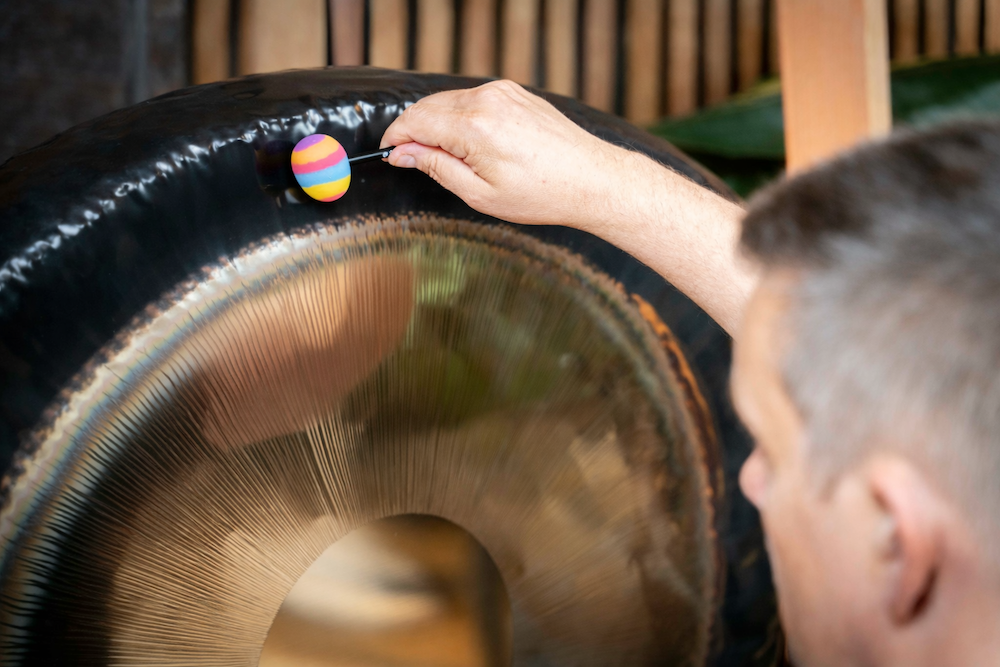
Myth #2: “Playing on the edge? You don't do that!”
You've probably heard this sentence before. But is it really true? We'll clarify!
The edge is full of overtones
The edge of your gong is far from an area you should avoid.
This is where particularly rich and vibrant overtones are created, expanding your playing and adding more depth.
While the center carries the fundamental tone, the edge brings more brilliance and movement, finer structures in the sound, and clear, present impulses.
You cannot create these sounds in this way in the center.
Even more sonic variety
Whether with a gong mallet or friction mallet: a great variety of sounds unfolds at the edge of your gong.
With a mallet, you can create precise, clear accents on the gong's rim, helping to open up and structure its sound.
A friction mallet creates multilayered, floating overtones and vibrant soundscapes with surprising depth.
Especially in gong baths, sound baths, or meditations, the rim can help introduce new impulses and make the space more dynamic.
Our conclusion: Also play the rim
The rim of your gong is not a taboo for us – it's a true treasure trove of sound.
Therefore, we advise you to consciously integrate it into your playing. With the right technique and the appropriate gong mallet or friction mallet, you can discover fascinating timbres that will enrich your gong playing.