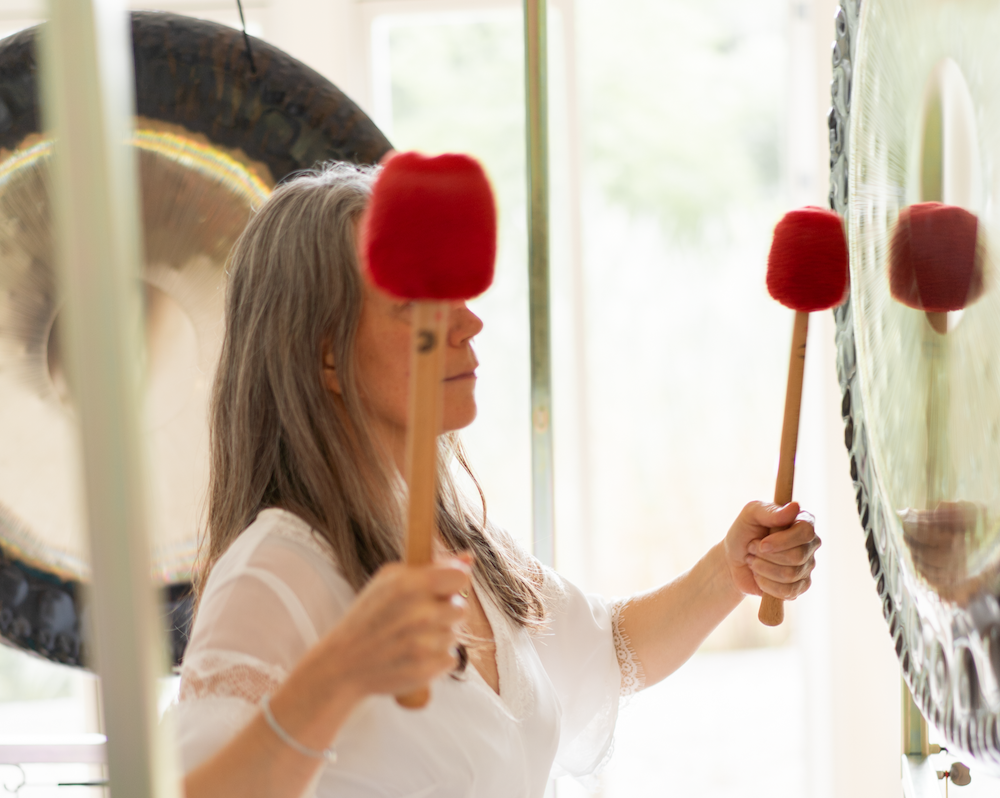


A friction mallet is a very versatile sound tool – with it, you can create special effects or conjure deep, long-lasting vibrations from your gong. A friction mallet connects you with your sound instrument in its own unique way – but which one is right for you and your needs?
This article will help you find the friction mallet that best suits you, your gong, and your playing style. Whether for sound meditations, sound baths, concerts, or sound therapy – we show you what to consider when choosing a friction mallet.
What sounds do you want to create with the friction mallet?
A friction mallet creates crystal-clear highlights, brings the surface of your gong into long-lasting, intense vibration, and produces ethereal sounds. Depending on how the friction mallet is designed, what material it is made of, and what surface the head has, very different sounds can be produced. Of course, your individual playing style and the instrument you use it on also have a significant influence on the sound.
Generally, it can be said:
- Fine, high overtones: Choose a friction mallet with a smaller head and a rougher surface. It is ideal for precise and clear sound lines.
- Deep, intense vibrations: Choose a friction mallet with a larger head that has more contact with your gong. A finer surface also creates a deeper sound.
- Versatile soundscapes: Combine different friction mallets to fully explore the sound spectrum of your instrument.
What size is your gong?
The size of your gong naturally influences the choice of the right friction mallet. The larger your gong, the larger the friction mallet head can be. However, smaller friction mallets can also be used on large gongs, for example, if you want to create resonant accents. The opposite is not recommended: if you use large friction mallets on small gongs, your instrument can be overstimulated.
Friction Mallets for Large and Small Gongs:
- Large Gongs (> 60 cm): Use larger models like the Intense Edition 70 to unleash full volume and depth while creating very fine nuances. However, small friction mallets can also be wonderfully used on large gongs.
- Kleine Gongs (< 60 cm): Kleine Gongreiber wie zum Beispiel die Smooth Lava Edition 30 bieten dir Kontrolle und ein feines, helles Klangbild. Zu große Gongreiber hingegen überreizen dein Klanginstrument und sind daher nicht zu empfehlen.
Which type of gong do you want to play?
There are many different types of gongs, each with distinct characteristics that cause them to behave differently depending on which friction mallet you use. For example, the same friction mallet can produce a completely different tone on a flat gong than on a curved gong. The shape of the gong's surface also influences how the friction mallet needs to be guided.
- TamTam Gongs: TamTam Gongs have a flat surface with a slightly inwardly curved rim. Depending on the friction mallet used, they can produce a dark, vibrating rumble or a deep hum.
- Feng Gongs: Feng Gongs, also known as Wind Gongs, have a very flat playing surface without any curvature. This makes them react very directly to the friction mallet, usually producing brighter, clearer tones with a quick response.
Our Tip: Test different friction mallet models to discover how your gong reacts to them.
What is the friction mallet intended for?
Friction mallets can be used for peaceful sound meditations, powerful sound baths, energetic concerts, or in sound therapy. The right friction mallet for a particular application primarily depends on the energy or mood you wish to create.
- Sound Meditation, Sound Journeys, Sound Therapy: Prefer models that produce gentle and long-lasting sounds. Models with medium to large heads allow for calm vibrations that create space and lead to relaxation.
- Concerts and Experimental Gong Playing: With friction mallets like our Crazy Egg, you can create visual and acoustic accents. It offers various playing possibilities and brings vibrancy to your sound practice. Use smaller friction mallets like the Intense Edition 50 on a large gong to set striking sound accents.
Which playing technique do you want to use?
Depending on your playing technique, different friction mallets may be better suited for you and your gong. If you use your friction mallet for long-lasting, constant sounds, pay special attention to ensure that the friction mallet feels comfortable and balanced in your hand – allowing you to fully concentrate on your gong playing.
- Slow Circular Movements: Choose a friction mallet that matches the size of your gong. Use small friction mallets for smaller gongs, and medium to large friction mallets for larger gongs.
- Targeted Strokes: Choose smaller friction mallets for larger gongs to create resonant accents. Or try friction mallets with different surfaces to experiment.
- Using Two Friction Mallets Simultaneously: Lighter models are particularly well-suited for two-handed playing.

Pay attention to Quality, Material, and Balance
The sound a friction mallet produces is significantly determined by the quality of its materials, craftsmanship, and construction. This is what defines a high-quality friction mallet:
- Natural Caoutchouc Head: Natural caoutchouc is soft, durable, and leaves no marks on your gong.
- Optimally Roughened: A finely or coarsely roughened spherical surface prevents squeaking during playing – creating a pure sound.
- Ergonomic Balance: The head and handle of a friction mallet should be optimally matched – this ensures comfortable handling.
- Durable and Sustainable: High-quality, regional materials, clean craftsmanship, and fair production all influence the sound.
Did you know?
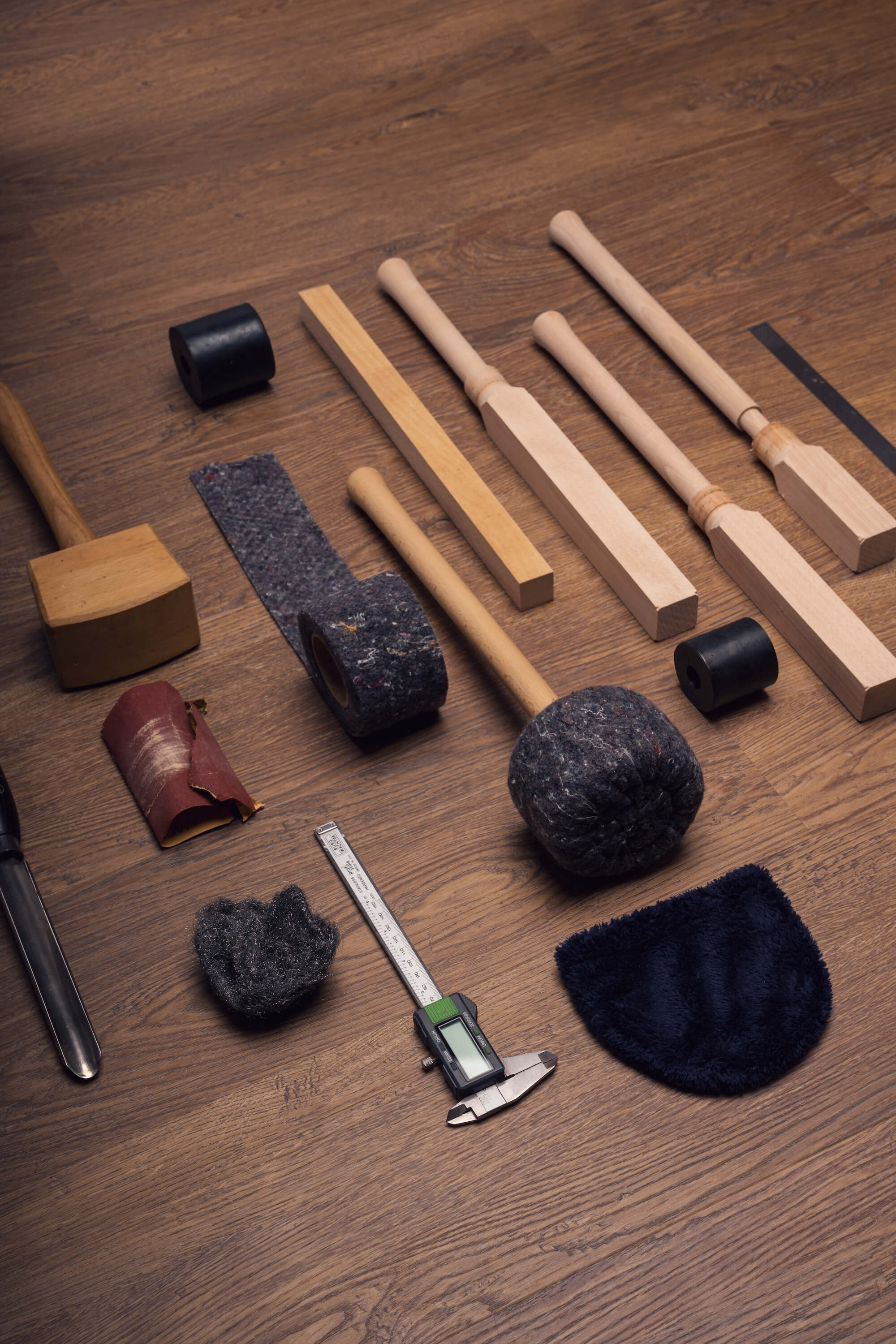
Every ollihess friction mallet is developed from the personal sound practice and many years of experience of Olli Hess and our loyal community. Our attention to detail and personal connection with our producers make all the difference. Each friction mallet is handcrafted in Germany by Olli and his son David, using sustainable materials.
Which friction mallets are suitable for singing bowls?
Many friction mallets can also be used with singing bowls. Here too, keep in mind: the larger the singing bowl, the larger your friction mallet should be. For example, the friction mallet Lava Edition 40 / 50 allows for very deep as well as gentle and bright tones on a large singing bowl.
Tip: To learn more about ollihess singing bowl friction mallets, please read the detailed descriptions in our shop or our blog post “Our Top Mallets for Singing Bowls” – there you will find information on the compatibility of our mallets and friction mallets with singing bowls.
Do you have personal preferences?
Design, color, and shape play an important role. A friction mallet that appeals to you visually and tactilely strengthens your connection to the instrument and your sound practice. To better understand your preferences, you can ask yourself the following questions:
- Are you a fan of clean lines or do you prefer something more playful?
- Are you fascinated by unusual shapes like the Crazy Egg?
- Do you prefer warm earth tones or bright shades?
- Do you like subtle colors or do you prefer something more vibrant?
Still unsure? We'll advise you personally!
Choosing the right friction mallet can sometimes be challenging – and that's exactly why we're here to help you. Use our WhatsApp chat at the bottom right of our website or contact us via our contact form – whichever you prefer. We take our time, listen, and offer honest advice.