

The gong is much more than just a traditional instrument – it is a resonant body with a soul. For centuries, it has been used in various cultures for rituals, meditations, and energetic work. What many don't realize is that a gong can produce an incredibly versatile range of sounds. Instead of just a deep hum, depending on how it's played, where it's struck, and the mallet used, completely different frequencies and soundscapes emerge – from deeply earthy to ethereally light.
The shape, material, and construction of the gong also significantly influence its sound character. In this article, we'll show you which gong frequencies and sounds are possible, how they are created – and how you can consciously work with them to enrich your body, mind, and space.
Feel the sounds and frequencies of the gong
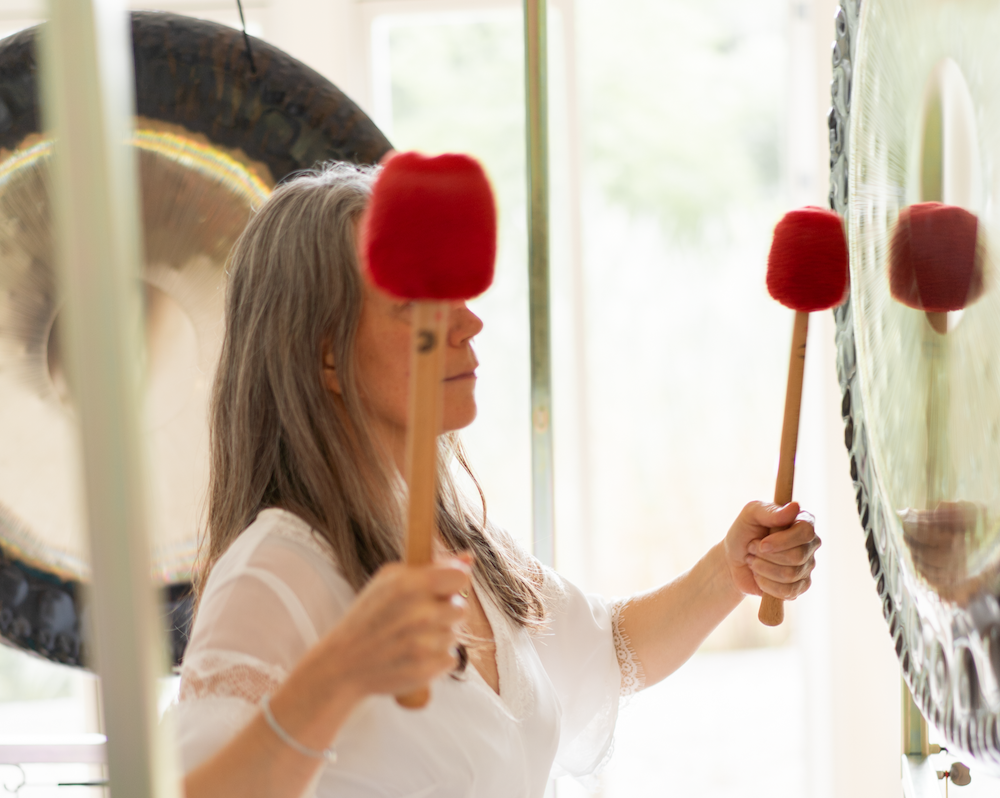
When you play a gong, its often deep and sensual sound fills the entire space. The energy emanating from the gong's powerful vibrations flows through your body – creating the meditative and calming feeling that gives this mystical instrument such an important role in many cultures. The sound of the gong is perceived by us humans as one of the so-called primordial sounds. It is a sound we seem to have known since the beginning of life. You listen to the different frequencies, and suddenly it becomes easy to fully immerse yourself in the gong's tones and feel how the rhythm slows your thoughts.
Every gong sound is not only audible but also physically palpable – through the depth and breadth of its frequencies, a connection is created between sound perception and inner resonance. The slow vibrations of deep gong frequencies, in particular, are known to calm your nervous system and intensify your self-awareness.
There is a very fitting quote from Yogi Bhajan, one of the world's most renowned gong players:
„The Gong is not sound – the Gong is resound.“
Yogi Bajhan
Loosely translated, this means that for you, the gong is not just a sound you hear with your ears, but primarily a resonance that vibrates in tune with your inner voice. And that's precisely what makes playing the gong so special: you can access deep emotions and needs that you might not otherwise reach without the calming frequencies of the gong.
Gong frequencies and chakras
Depending on the gong frequency, specific energetic levels in the body can be targeted – for example, a warm, deep gong sound can ground the root chakra, while high, floating frequencies can open the brow or crown chakra.
Which frequencies you want to create with your gong playing therefore also depends on whether you want to address a specific chakra.
Did you know: Olli Hess has developed a unique gong mallet for each chakra, specifically designed to meet the needs of the different chakras:
-
Profi Gong Mallet CH1 – Crown Chakra
Bright, clear sound for connecting with higher levels of consciousness -
Profi Gong Mallet CH2 – Throat Chakra
Gentle, clear tones for communication and expression -
Profi Gong Mallet CH3 – Heart & Solar Plexus Chakra
Medium to deep sounds for emotion & self-confidence -
Profi Gong Mallet CH4 – Root Chakra
Deep, grounding frequencies for stability and security
If you want to learn more about chakra frequencies, you can take a look at our blog post on Chakra Tones and Meditation.
What tones or frequencies can the gong produce?
The frequency your gong reaches naturally depends on several factors:
- Which gong you play
- Which gong mallets or friction mallets you use
- Which playing technique and striking points you choose
- Where the gong is placed
First and foremost, the choice of gong is important. The bossed gong has a clearly defined pitch, which sounds different at the side edges compared to the deep boss in the center of the gong. Here you can choose between brighter tones created by striking the edges with a mallet, and a deep, Om-like tone produced in the center of the boss. The flat TamTam gong, however, is different; while it also achieves various frequencies, its richness comes primarily from the subtle nuances of its sounds.
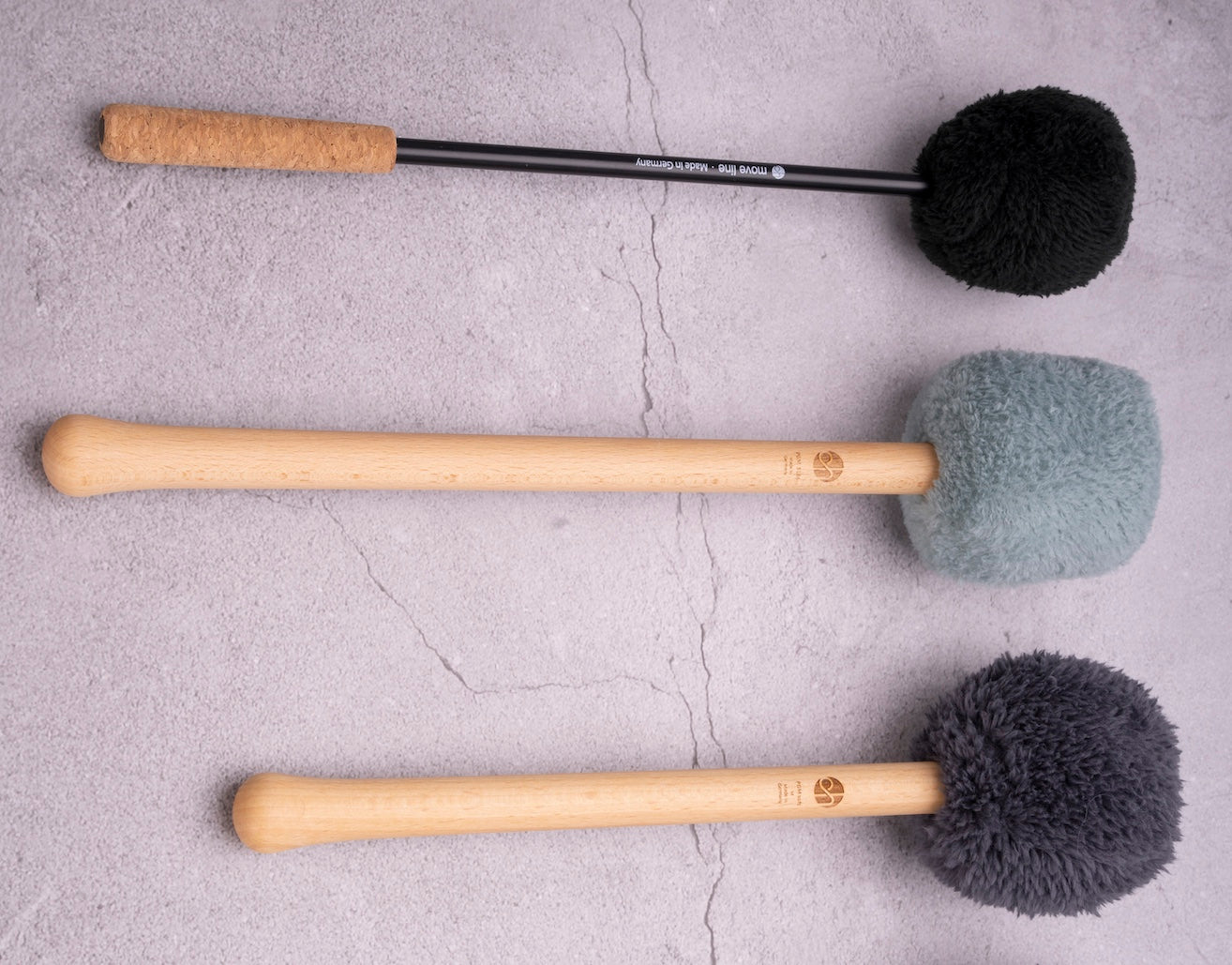
The gong tones produced during sound play naturally always depend on the mallet used. The requirements are accordingly high: A gong mallet or friction mallet should always be adapted to the type of gong.
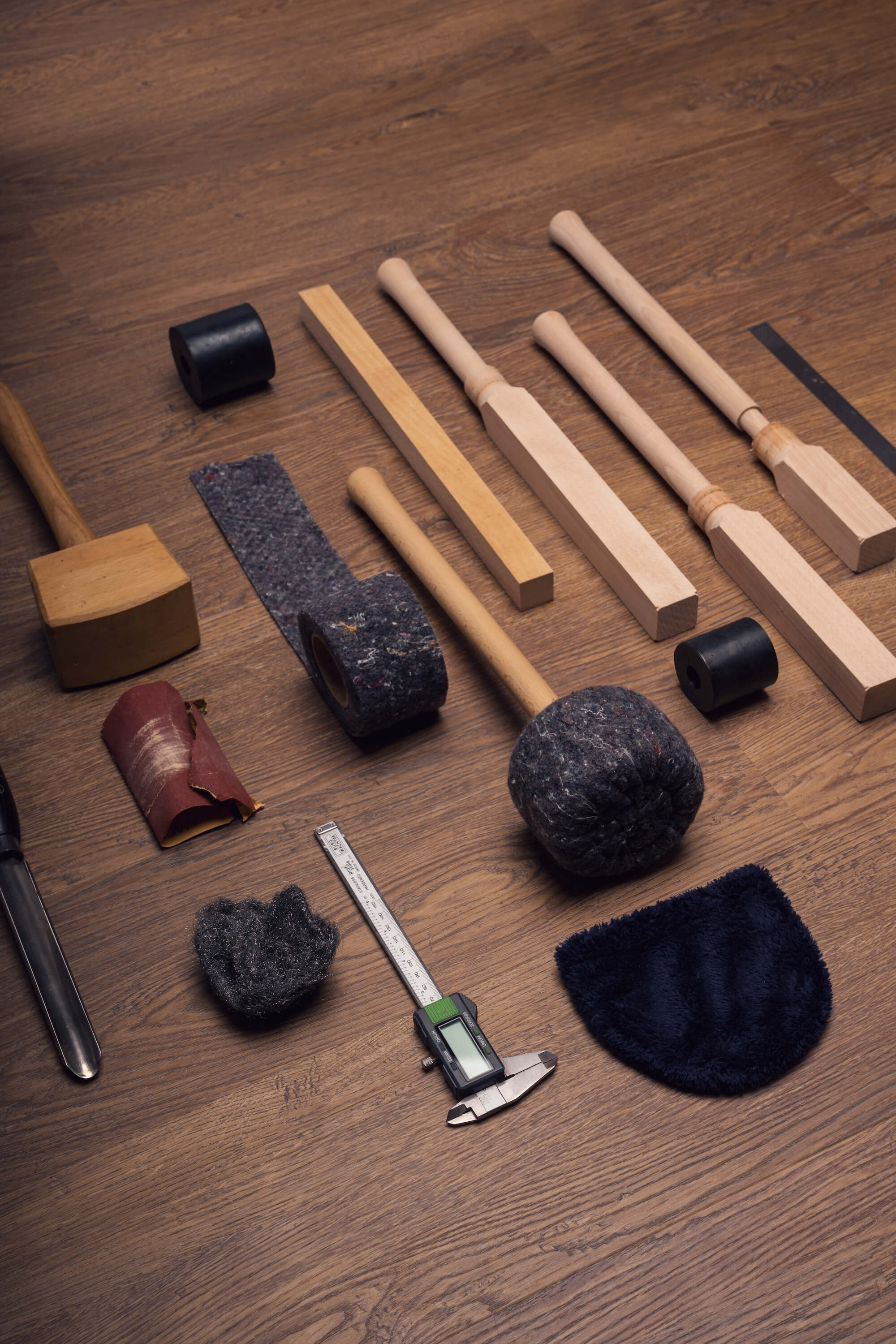
The width of the head and the length of the mallet influence the tones produced by a strike. And naturally, the material used for the gong mallet also plays a very important role. Therefore, it is crucial to focus on quality when buying a gong mallet, as this is the only way to achieve the rich soundscapes that make playing the gong so unique.
The deliberate selection of mallet, striking point, and playing technique allows you to actively shape every gong sound – creating a vibrant spectrum of timbres and frequency progressions that affect the body, mind, and the entire space.
Which mallet allows you to unleash the full sound spectrum of your gong?
You can explore many facets of your gong with just one mallet. An all-round mallet like the Profi Gong Mallet S186 has a handy size and light weight – yet it delivers an incredible range in sound and handling. Opt for a Gong Mallet Set that opens up the entire world of sounds to you. Our mallet sets include up to four different mallets, with which you can play both gongs and singing bowls. This allows you to achieve clear, delicate tones as well as deep and voluminous frequencies.
For particularly deep sounds on larger gongs, use a correspondingly large gong mallet. For very large gongs, for example, the Profi Gong Mallet L815 is an excellent choice, as it is the heaviest and largest mallet in our range – yet it still allows for easy and comfortable handling. Thanks to its exceptionally large size, this gong mallet can also produce the deepest and most sensual frequencies on the gong. The soft caoutchouc head with a wellness fleece cover creates warm and deep tones and is ideal for playing on a large gong.
Gong frequencies in numbers - your gong reaches these dimensions
The frequencies a gong reaches always depend on its individual design and the choice of mallet. Most gongs achieve very deep and voluminous frequencies, often extending beyond 100 Hz.
Generally, the larger a gong is, the richer the playable frequency range. The tones produced at the edge of a gong are always much higher and lighter than the deep tones that can be played in its center.
While smaller gongs often produce sharp, clear frequencies between 400 and 900 Hz, large Earth gongs or TamTams are capable of creating deep gong sounds in the range of 60 to 140 Hz – perfect for meditative soundscapes and physically palpable vibrations.
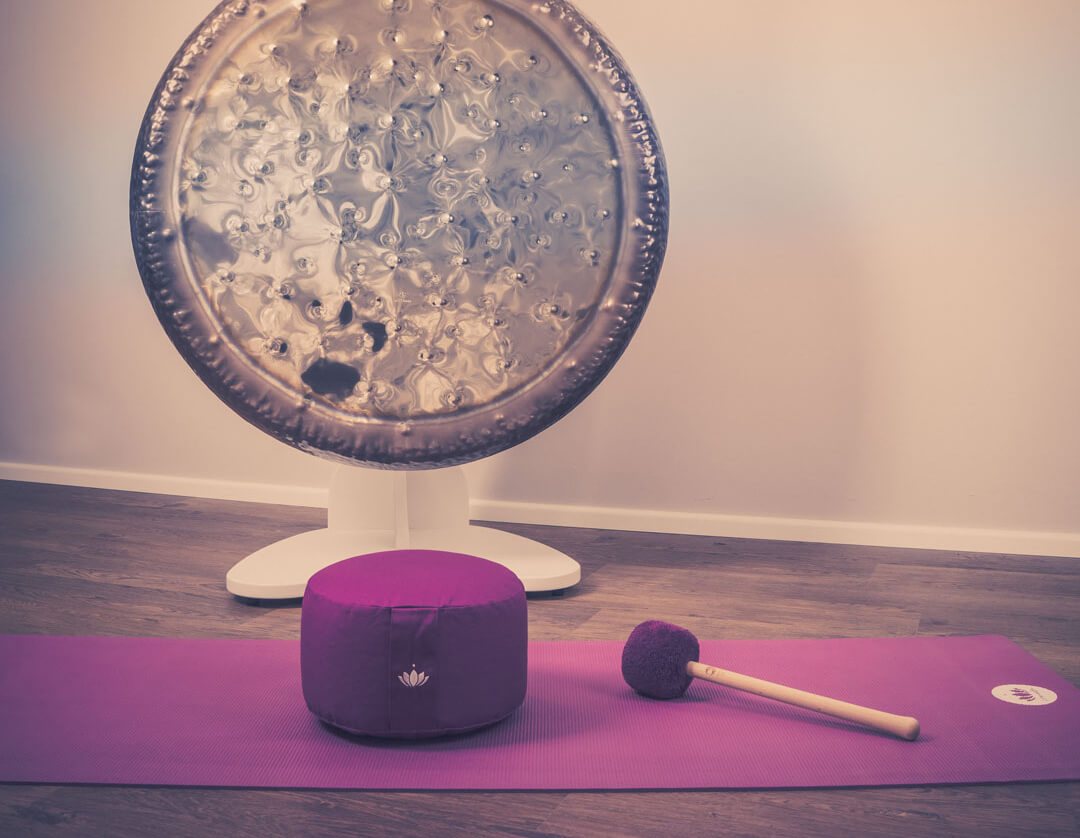
The shape of the gong also naturally has a significant influence on the frequencies that can be played with it. For example, the ollihess Gong “Sadja” with a 36-inch diameter is a very overtone-rich gong. The special feature of this Earth gong is that the listener immediately feels directly connected to the Earth and can sense the slow orbits of the sun. This type of gong has been used for millennia in sound-healing rituals and plays an important role, especially in Indian culture.
The frequency of the Sadja Gong 36 inches averages between 130 and 140 Hz. As a counterpart, the ollihess Gong Wega with 40 inches is an excellent choice, as it creates a more spherical sound that represents cosmic rhythms. The special depth of this gong also lies in its overtone spectrum, allowing tones, vibrations, frequencies, and energy to immediately project onto the listener.
Audio samples - immerse yourself in the world of gong sounds
The purchase of a gong should be well-considered, as each sound instrument is unique. It is therefore always worthwhile to listen to various gong sound samples beforehand and to explore the exciting interplay of frequencies in more detail.
Check out on our YouTube Channel more videos, and hear for yourself what sounds are produced on the ollihess professional gongs with different mallets and friction mallets.
Use these sound samples to discover which gong sound best resonates with your body, breathing rhythm, or meditation style. This is because every frequency – whether high, deep, rich, or vibrating – addresses different levels of your being. Please note: The vibrations are only partially transmitted in a recorded sound sample – however, this way you will get a first impression. Every Olli Hess gong is crafted with passion and loving handwork in Germany, in collaboration with gong maker Broder Oetken. This pure handcraft ensures continuous quality control, allowing for particularly fine sound spectra and a wide variety of gong tones and frequencies. For the production of our gongs, we use high-quality nickel silver, which is one of the highest-quality metals worldwide. You can find out more about our gongs on our shop page.What distinguishes ollihess gongs and their frequencies?