

Myth #4: “A gong has to be loud for you to feel it!”
You've probably heard this sentence before. But is it really true? We'll clarify!
It's the subtle sounds that make the difference
Many people associate the sound of a gong primarily with power, volume, and intense vibrations. But sound doesn't have to be loud to have a profound effect.
It is precisely a soft, gentle playing style that brings out the finest nuances of your gong. This creates subtle overtones and particularly delicate vibrations that can resonate on every level. So if you play only loudly, you are tapping into only a fraction of the sound spectrum.
A gentle touch adds more depth
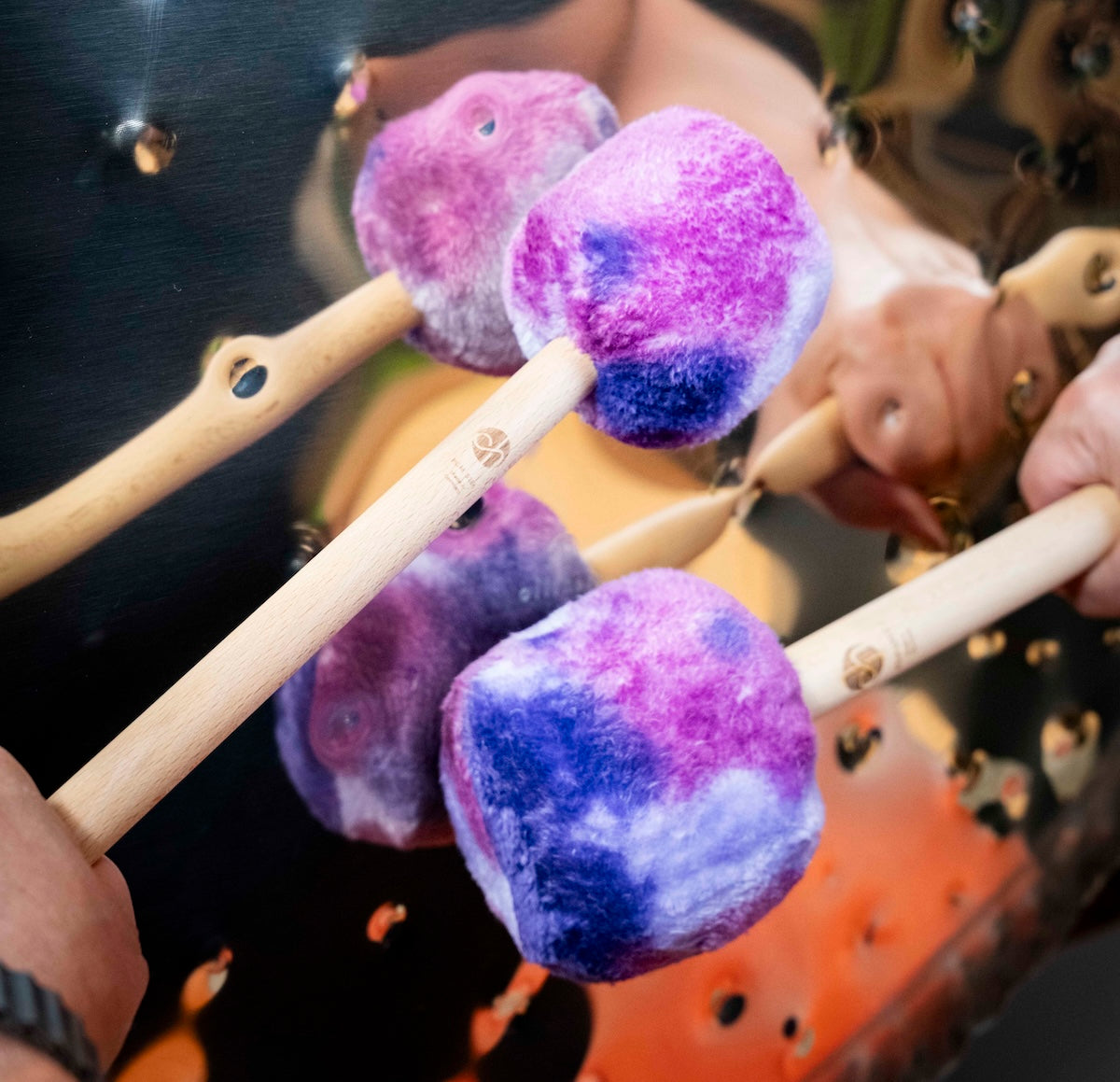
Your gong often responds particularly sensitively to mindful playing. Using soft gong mallets, you can create warm, layered soundscapes that slowly fill the room.
Gong strikers also allow you to produce delicate sounds and vibrant overtone structures that leave plenty of room for perception and silence.
Especially during gong meditations or Sound Baths A gentle performance can often have a deeper impact than sheer volume. This often makes it easier for people to open themselves up to the vibrations. The entire system can slowly “tune in” and engage with the experience.
Our takeaway: Don't be afraid to play quietly more often
A gong doesn’t have to be loud to touch people deeply. On the contrary: it’s often the soft tones that linger the longest. That’s why we encourage you to play with dynamics intentionally and discover the quiet, subtle aspects of your gong. That’s often where the most fascinating soundscapes emerge.