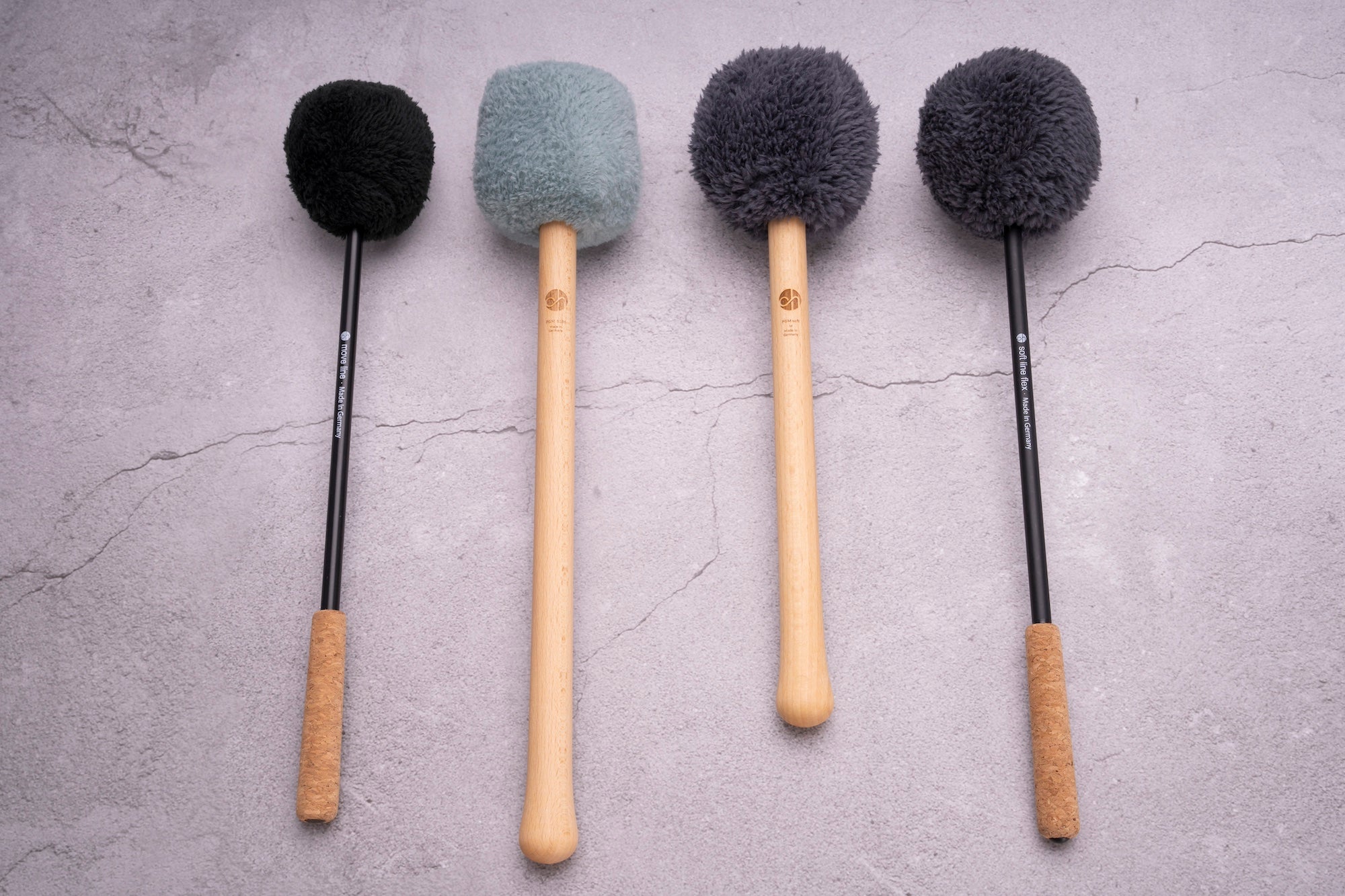


The right mallet can take your gong playing to a new level. But with all the options available now, the choice can also be overwhelming. Soft or hard? Large or small? For meditation or performance? Don't worry – our blog post will help you with exactly these questions.
You'll get an overview of what matters: sound, size, playing technique, handling, and of course, your personal feeling. Ultimately, what feels good to you and strengthens your connection to your gong is what counts.
What sounds do you want to create with the mallet?
Choosing the right mallet significantly influences the sound color of your gong playing – from deep and warm to bright and clear.
- Deep, warm & gentle sounds: Choose a large, softly padded mallet.
- Bright, distinct sounds: Smaller or harder mallets are more suitable.
- Versatile soundscapes: Combine different mallets.
What size is your gong?
The size of your gong determines which mallets are best suited for an optimal sound spectrum.
- Kleine Gongs (< 60 cm): Entscheide dich für leichtere und kleinere Mallets für präzise Kontrolle.
- Large gongs (> 60 cm): Choose larger mallets for powerful, voluminous tones.
Which type of gong do you want to play?
Each type of gong has its own sound characteristic – the right mallet optimally highlights its specific sound nuances.
- For TamTam gongs, mallets with thicker padding are suitable for a rich sound.
- For Feng gongs, finer mallets are suitable for a controlled response.
What is the mallet intended for?
Whether for meditative sound baths or gong baths, or powerful performances – your choice of the right mallet significantly influences the sound experience.
- Meditation and sound baths: Choose softer mallets for calming, long-lasting sounds.
- Performances and concerts: Add mallets with a harder core for powerful tones.
Which playing technique do you want to use?
Depending on how you want to play your gong, you should use mallets with different padding and ergonomics for optimal control and sound development.
- Gentle strikes: Choose softly padded mallets for slow, flowing movements.
- Dynamic gong playing: Opt for more stable and, above all, ergonomically shaped mallets.
Tip: In our sound recipes, we constantly provide new ideas and inspiration for your gong playing.
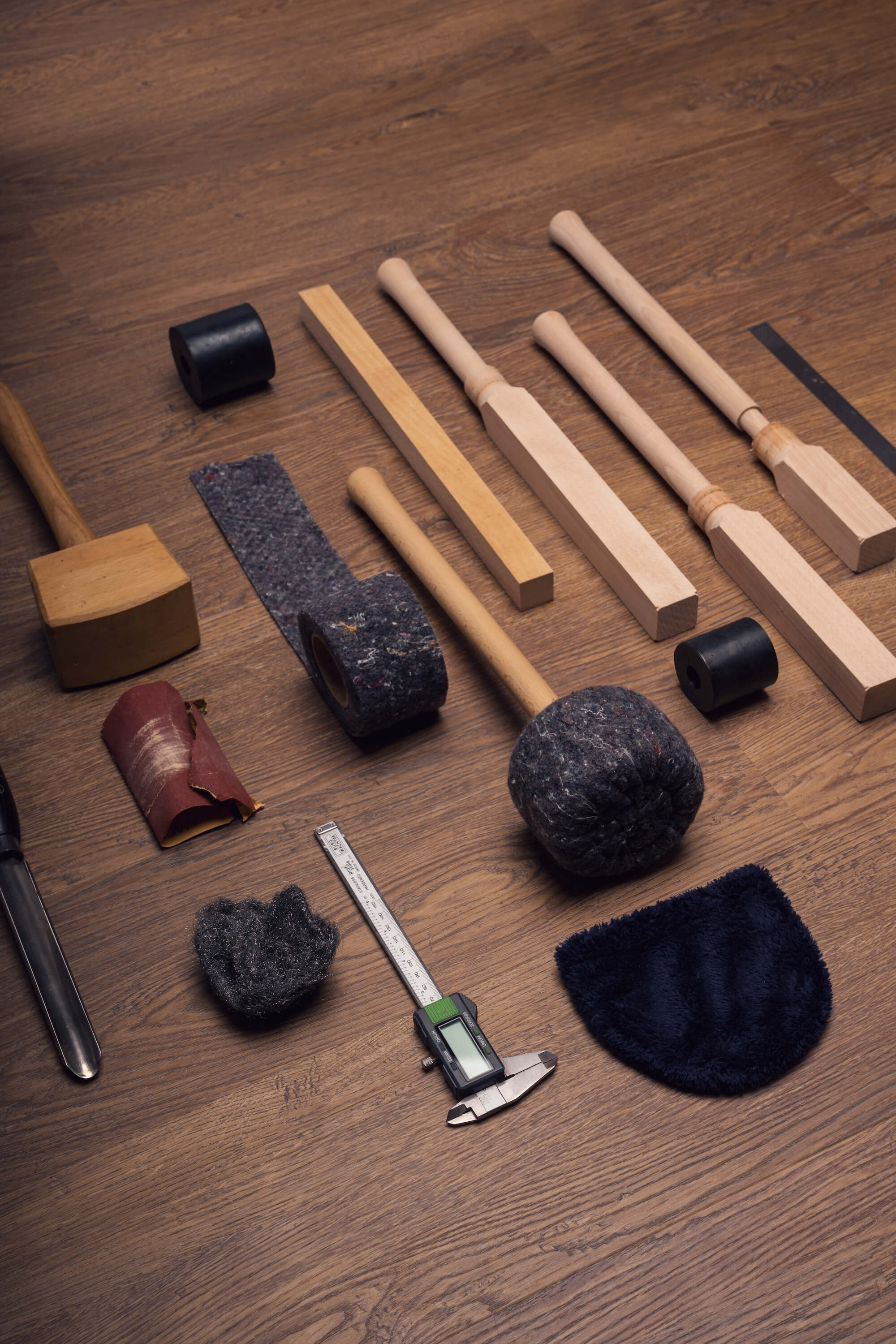
Learn about materials, craftsmanship, and durability.
A high-quality mallet should be well-crafted, feel comfortable in your hand, and feature durable materials. These questions can help you evaluate a mallet:
- Are the materials high-quality and durable?
- Are there visible seams, glue spots, or imperfections that could affect playing quality?
- Is the mallet's handle ergonomically shaped?
Is the mallet easy to handle?
A mallet that feels good in your hand and is perfectly balanced makes playing easier and ensures greater precision.
- Ergonomic Grip: Look for a well-balanced grip that feels comfortable in your hand.
- Non-slip: Textured or waxed grips provide more control.
Do you have personal preferences?
Choose a mallet that inspires you – its design and colors can strengthen your connection to the instrument.
- Do you prefer subtle and understated designs?
- Which colors appeal to you most?
- Which materials do you find aesthetically pleasing?
Finally: Get advice from an expert
Choosing the right mallet can sometimes be overwhelming due to the many options available. If you're unsure which variant best suits your gong and playing style, don't hesitate to seek professional advice.
Simply contact us via our contact form or WhatsApp (bottom right of the browser window). Alternatively, you can also contact a trusted specialist dealer who can give you a personal recommendation.