

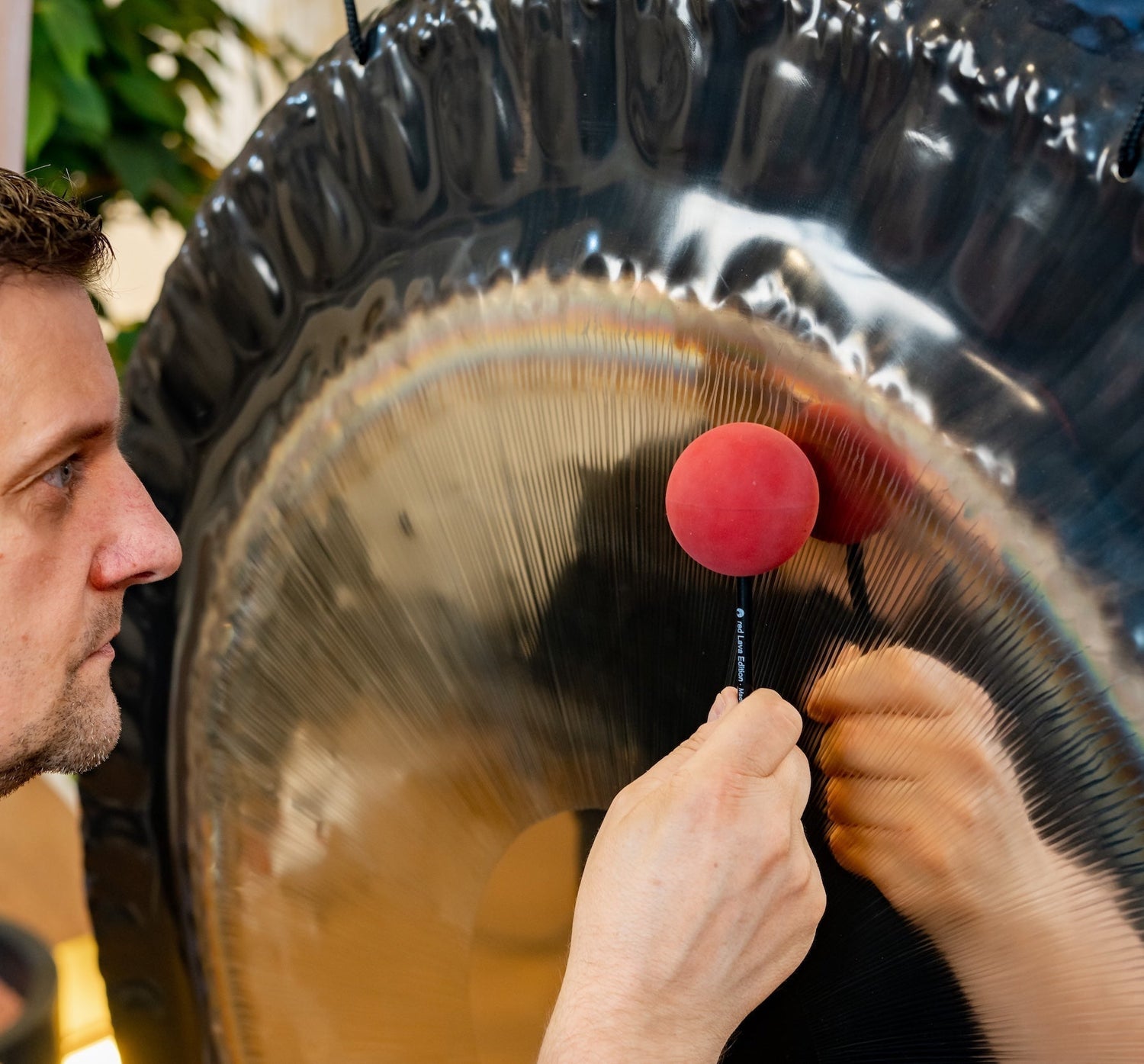
Every now and then, we get asked the question: Why does my friction mallet suddenly stop producing the desired sounds? The good news: it's almost never due to the quality of your friction mallet – but rather to its care, storage, or impurities on the surface of your gong.
In this article, we show you how hardening occurs, how to prevent it, and what you can do if your friction mallet already has deposits.
Why your friction mallet suddenly sounds 'different'
If your friction mallet no longer builds up sustained sound waves or 'scratches' your gong, the cause is often a hardened caoutchouc ball.
The hardening of the caoutchouc ball doesn't happen overnight – but through:
- Residues from cleaning or polishing agents on the gong that collect on the caoutchouc ball
- Dust and dirt picked up by the friction mallet from the gong surface
- UV radiation or improper storage affecting the material
- Very rare: Grinding marks from the manufacturing process on the friction mallet ball
All these influences can cause layers to build up on the head of your friction mallet. This changes how it connects with the gong, which can make the sound less vibrant or even cause it to disappear entirely.
How to prevent hardening and residue on your friction mallet
1. Clean your gong regularly and correctly
This is how it works:
- Nickel Silver Gongs: Polish nickel silver gongs with a warm, dry microfiber cloth.
- Bronze Gongs (TamTam, Feng Gong): You can clean these gongs with a damp cotton cloth and then wipe them dry.
Our Tip for Nickel Silver Gongs: For stubborn dirt on nickel silver gongs, we recommend Poliboy metal polish. With the included sponge, you can apply the polish and gently but thoroughly clean the surface of tarnish, dirt, and deposits. Important: Afterwards, make sure to rub your gong thoroughly dry with a microfiber cloth.
2. Only use suitable cleaning agents
Always avoid aggressive household cleaners or furniture polishes – they will build up on your gong and harden your friction mallet. Only use special cleaning agents designed for sound instruments.
Our tip for bronze gongs: Heavier dirt on TamTam and Feng gongs can be optimally cleaned and cared for with the Hess Sound Cleaning Stone and sponge. Tarnish, dirt, and deposits can be easily removed, and your gong will shine again in its full glory.
If you have sound instruments made of both nickel silver and bronze, we recommend our Gong Care Bundle Set.
3. Brush the friction mallet regularly
After every second or third use, you should carefully brush your friction mallet with a root or nail brush. This way, you quickly and effectively remove dust particles before they become permanently embedded.
4. Always store your friction mallets in a protected place.
Always store your friction mallets in a dry place and protected from UV light. For our friction mallets, you can use the included zipper bag or keep them in a box.
First aid for minor hardened spots on your friction mallet
If you notice the first changes to the friction mallet head, a simple trick often helps:
How to free your friction mallet from hardening:
- Boil water
- Hold the friction mallet over a sink
- Gently run hot water over the caoutchouc ball.
- Allow the friction mallet to dry (on a windowsill or heater)
Tip: Hot water can help soften the surface again – but only if it hasn't hardened too much yet.
What to do if the mallet head is already very hardened?
If the caoutchouc ball becomes noticeably hard or discolored (for instance, turning yellowish on a black friction mallet), a gentle sanding with sandpaper (grit 40–60) is often the only effective remedy.
We do not recommend soaking your friction mallet in cleaning solutions, as they can damage its material.
Our conclusion: Regularly care for your friction mallets
Hardening on your friction mallet is not a material defect; it usually results from dirt, residue, or improper storage. By regularly cleaning your gong, brushing your friction mallet after use, and storing it in a dry place, you will enjoy its sound and friction for many years.
And if you're not sure what your friction mallet needs – feel free to contact us anytime. We'll be happy to advise you.