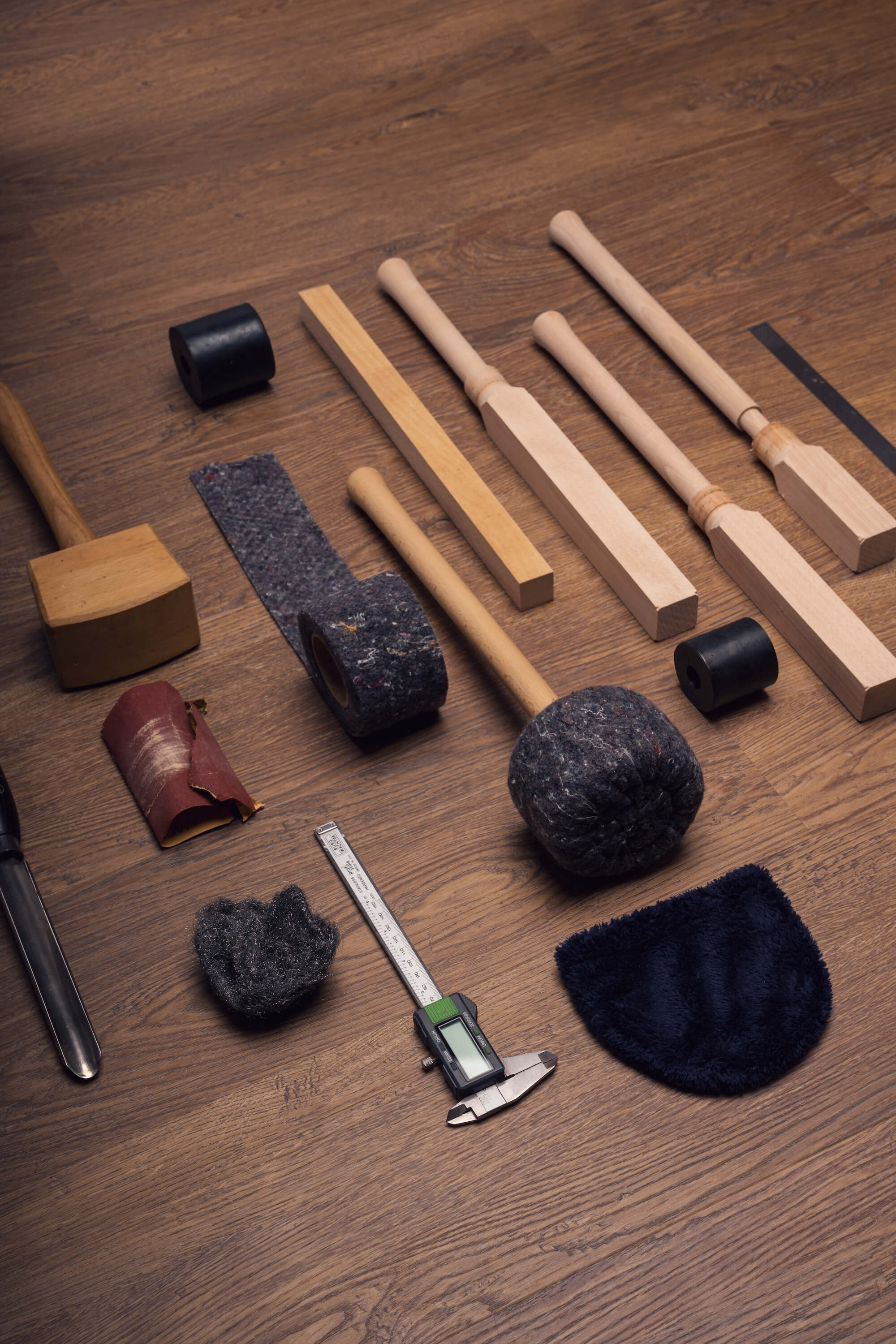


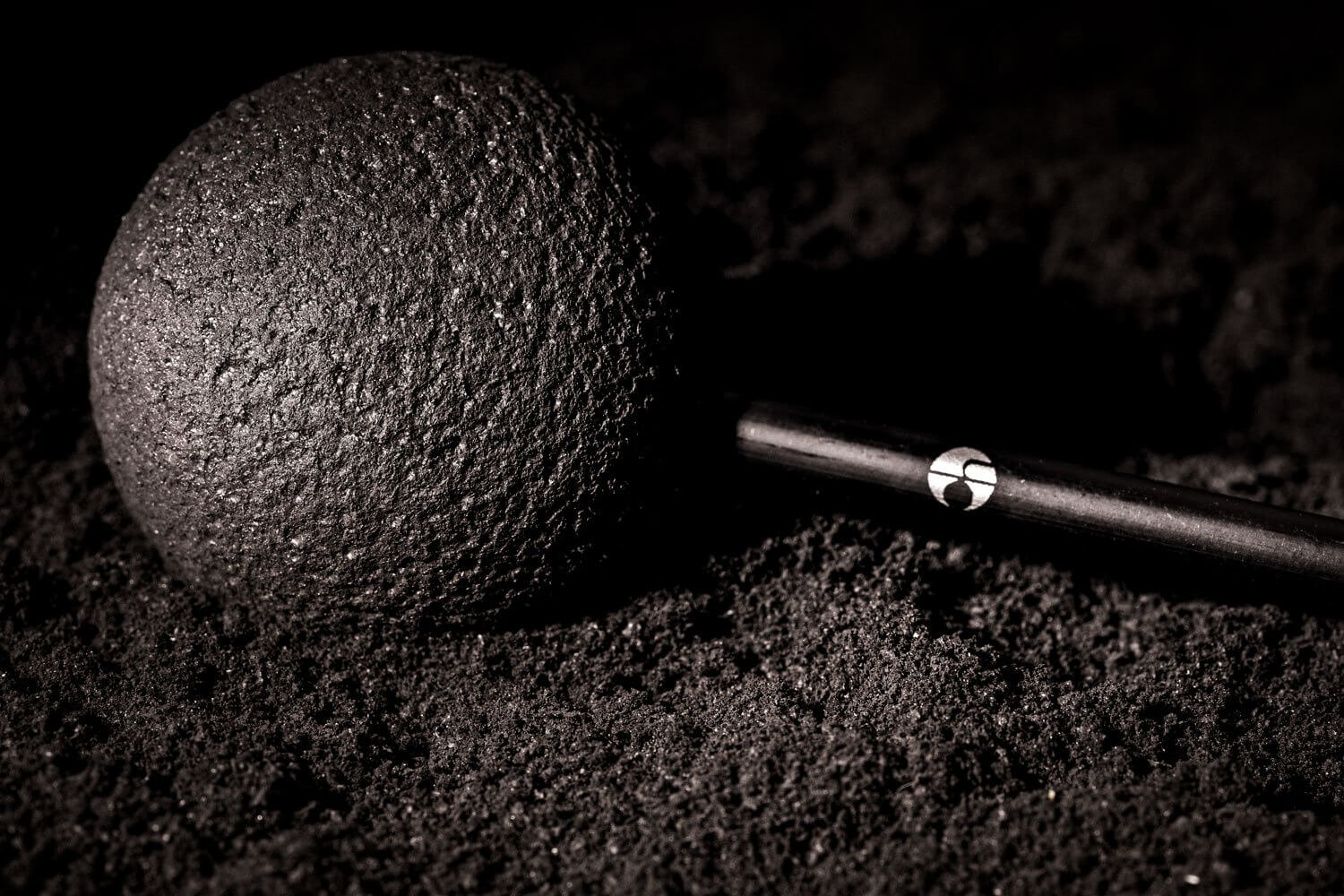
Have you ever taken a closer look at the materials we use to make our mallets and friction mallets? Besides wellness fleece and cork, natural caoutchouc is primarily used in the heads of our mallets and friction mallets. Why? You can find out in this article.
Where does natural caoutchouc come from?
Natural caoutchouc is extracted from the sap of certain trees and is known for its exceptional elasticity. In most cases, natural caoutchouc comes from trees native to South America or Southeast Asia. The initially very liquid caoutchouc milk is extracted from the bark, collected, and then processed until a solid mass is formed. The resulting caoutchouc is further processed into a wide variety of products: tires, rubber products, and especially mallets and friction mallets for gongs.
5 Reasons Why Natural Caoutchouc is the Perfect Material for Gong Mallets and Friction Mallets
1. exceptionally light material
natural caoutchouc is a very light material due to its structure and composition. It consists of long chains of carbon and hydrogen atoms that are bonded together. The advantage: thanks to the optimum weight distribution between the head and handle, the mallet is always well balanced in your hand. Even if you play the gong for a long time, you won't experience any signs of fatigue in your arms or back.
2. natural caoutchouc is environmentally friendly
Natural caoutchouc is a sustainable material because it is biodegradable and contains no synthetic chemicals. As with all materials we process, we have also chosen a vegan and particularly environmentally friendly alternative for the mallet head. If environmental protection is important to you, a mallet or friction mallet made of natural caoutchouc is an excellent choice.
3. elasticity brings a broad sound spectrum
natural caoutchouc is a super elastic material and has a high resilience. In combination with our unique insulation layer, this creates a mallet that has a particularly springy, "bouncy" effect. This property makes it possible to produce an incredibly wide sound spectrum. If you strike your gong very gently with our mallets with natural caoutchouc core, you can produce a soft, warm sound. However, if you hit the gong harder, you can also produce a powerful, loud sound with intense vibrations.
4. durable and wear-resistant
natural caoutchouc is already extremely durable and resistant to wear. In addition, with a mallet with natural caoutchouc , the core will not break through the insulation layer at some point, causing the sound to change significantly or possibly even damaging your gong. In addition, a gong mallet with a pure natural caoutchouc head is very abrasion-resistant and has a long service life, which means that it retains its properties even with frequent use and contact with other materials. This is another advantage for the use of natural caoutchouc.
5. good damping for soft and warm sounds
Natural caoutchouc can absorb sound waves well. A material that absorbs sound waves well does not reflect them. When you strike a gong with a natural caoutchouc mallet, the mallet absorbs the sound waves, ensuring that the sound is soft and warm. Therefore, natural caoutchouc is the perfect material for friction mallets and gong mallets, as it can produce a wide range of sounds and is also durable, wear-resistant, and environmentally friendly. Olli Hess has been producing mallets and friction mallets from natural caoutchouc for many years. Every gong mallet and friction mallet was once designed in his workshop and is then handmade in small family businesses. So, if you are looking for a high-quality and particularly durable mallet for your gong, you have come to the right place.